
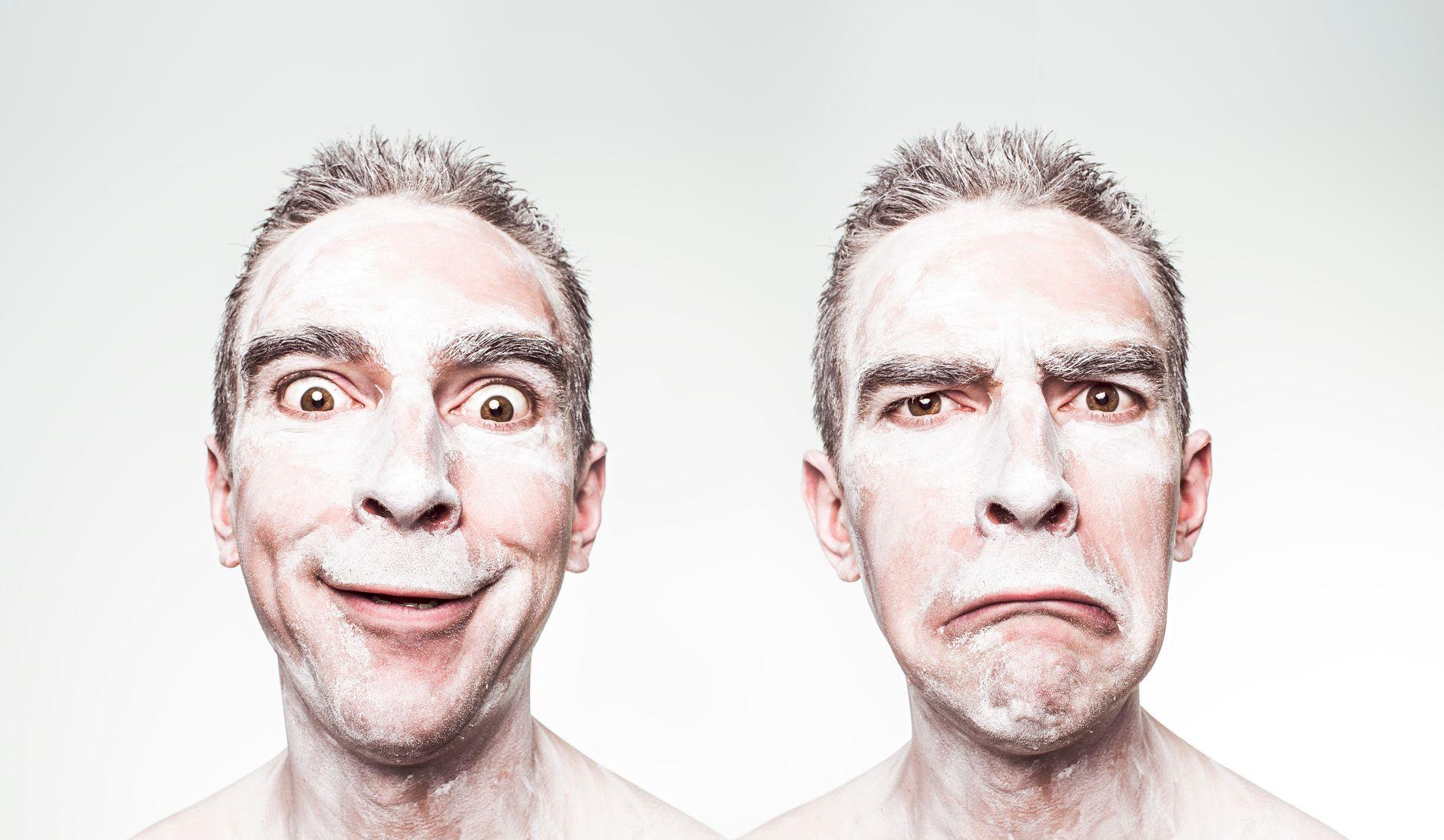

The Mirroring Monkey Brain: Why Your Face Does What Theirs Does
You know that weird feeling when you see someone yawn, and suddenly you’re fighting an urge to do the same? Or when you’re watching a movie and the actor smiles, and you feel a little smile creep onto your own face, even if you don’t quite know why? It’s not just you. Humans have this incredibly powerful, almost automatic tendency to mimic the facial expressions of others, and it turns out there’s a deep-seated reason for it. Scientists have pinpointed a phenomenon called mimicry, which is essentially our brain’s unconscious way of mirroring the emotions and expressions we see. Think of it as a built-in empathy tool. Studies suggest this mimicry starts really early, even in infants, who will often copy facial movements made by their parents. It’s like our nervous system is wired to create a connection, a kind of shared experience, before we even fully understand what’s happening.
This automatic imitation isn’t just some random quirk. It’s believed to be a fundamental part of how we build social bonds and understand each other. When you mirror someone’s frown, for instance, your own brain activates similar emotional pathways, helping you to feel a flicker of what they might be feeling. This is thought to be a key component of empathy and social cognition. It’s how we learn to read the room, to gauge intentions, and to navigate complex social situations without having to overthink every single cue. Researchers have found that people who are better at facial mimicry tend to be perceived as more empathetic and are better at understanding the emotions of others. It’s a surprisingly sophisticated, yet utterly instinctual, form of communication.
It gets even weirder when you consider the mirror neurons. These are special brain cells that fire both when we perform an action and when we observe someone else performing the same action. They’re like tiny internal actors, constantly playing out what we see. When you see someone cry, your mirror neurons associated with sadness might activate, and bam, you might feel a pang of sadness yourself. It’s been a topic of intense study, with some scientists proposing they are the very foundation of our ability to understand others’ actions and intentions. The implications are pretty mind-boggling, suggesting a biological basis for much of our social behavior.
However, this constant mirroring isn’t always a walk in the park. There’s a genuine downside to this built-in reflex. Sometimes, we unconsciously adopt negative emotions just by being around people who are expressing them. If you’re already feeling a bit down, and you spend time with someone who’s constantly complaining or looking miserable, you might find yourself feeling even worse, not because of your own circumstances, but because you’re unconsciously absorbing their negative expressions. It’s like a social contagion of mood, and it can be utterly exhausting to constantly fight off the emotional residue of everyone around you. I’ve definitely noticed this myself after a long day of meetings where everyone’s got that stressed-out look; I’ll catch myself with my own jaw clenched without even realizing why.
The scientific community, while largely agreeing on the existence of mimicry, is still debating the exact mechanisms and the full extent of its impact. Some researchers, like the team at the UCLA Neuropsychiatric Institute, have explored how autism spectrum disorder can affect this facial mimicry, often leading to challenges in social interaction and empathy. This highlights how crucial mimicry is for typical social development. Understanding these differences helps us appreciate just how finely tuned our social circuits are. It’s not just about a few smiley faces; it’s about the fundamental architecture of human connection, with systems that have likely evolved over hundreds of thousands of years to keep our social groups cohesive.
And here’s where it gets tricky for some: what if you’re not naturally inclined to mirror expressions? For example, individuals with conditions that affect emotional recognition, like some forms of schizophrenia, may struggle to engage in this automatic mimicry. This isn’t a moral failing; it’s a neurological difference that can make navigating social interactions incredibly challenging. Imagine trying to understand a conversation where half the cues are completely lost on you. It’s a stark reminder of the biological underpinnings of our everyday social graces. The financial cost of dealing with such conditions, including therapy and support services, can run into the tens of thousands of dollars annually for families, as documented by organizations like the National Alliance on Mental Illness (NAMI).
Ultimately, this instinct to mirror expressions is a powerful, albeit sometimes inconvenient, aspect of being human. It’s a subconscious handshake, a silent agreement to connect and understand. It’s fascinating to think that our faces are constantly broadcasting and receiving emotional signals on a level we’re barely aware of. While there’s ongoing research into precise brain regions like the premotor cortex and its role in this, the general idea remains: we’re wired to connect through imitation. The sheer efficiency of this system, allowing us to understand complex emotional states in mere milliseconds, is truly remarkable. For a deeper dive into the neuroscience of empathy, the Greater Good Science Center at UC Berkeley offers extensive resources.
So, the next time you find yourself unconsciously mirroring someone’s grin or wince, don’t overthink it. Your brain is just doing its thing, trying to build a bridge. It’s a fundamental part of the human experience, and frankly, it’s a lot more efficient than having to verbally explain every single feeling. But what if, on a deeply primal level, this mirroring is actually the reason we’re all just slightly delusional about our own individual feelings?