
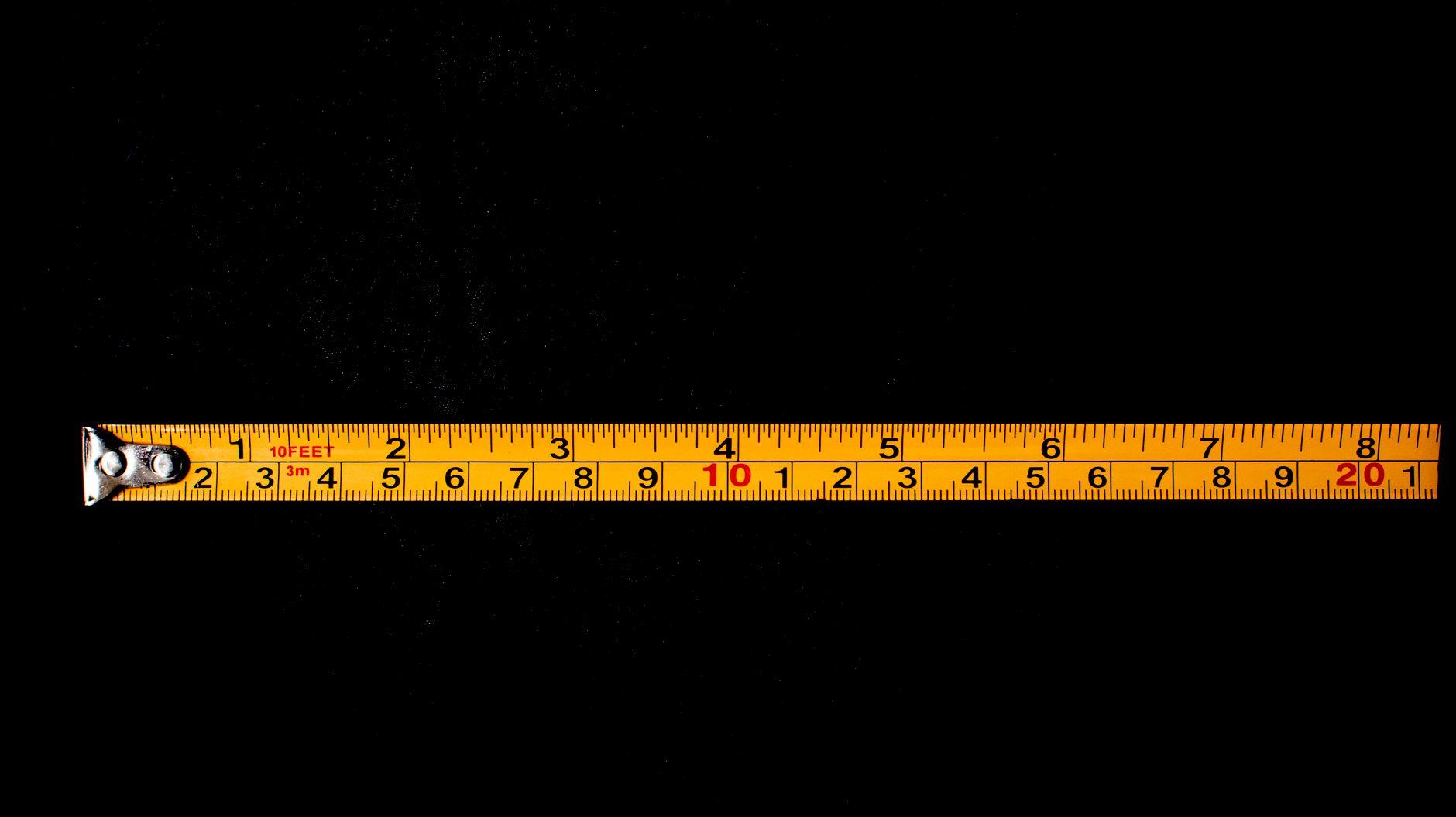

From King’s Feet to Atomic Clocks: Why We Still Use Crazy Old Measurements
You know, it’s wild how we still talk about things in terms of feet and inches, right? I mean, a foot is supposed to be, like, a king’s foot from way back when. Can you imagine trying to standardize that across an entire kingdom? It’s a wonder anything got built! That’s the fascinating, and frankly, a little bonkers, history behind units of measurement that we still rely on every single day. We’re talking about stuff like miles, pounds, and gallons that have roots stretching back centuries, sometimes even millennia. It’s not like someone just woke up one day and said, “Yep, 3.28 feet sounds about right for a meter.” Nope, it’s a messy, historical jumble.
The foot, as a unit of length, likely originated from the approximate length of a human foot. Think ancient Mesopotamia, Egypt, Rome. Different cultures used their own versions, often based on the reigning monarch’s foot. This created a huge mess. If you wanted to buy land in, say, England, and the king had unusually large feet, you were getting a lot more land than if you bought from a king with dainty feet. That’s precisely the kind of inconsistency that drove people nuts, and eventually, led to the push for standardized systems like the metric system.
It wasn’t just length that was chaotic. Think about weight. The pound has a similar convoluted past, tracing its lineage back to the Roman libra pondo, meaning “a pound by weight.” Over time, different versions of the pound emerged – the avoirdupois pound (about 0.45 kilograms) for everyday goods, and the troy pound (about 0.37 kilograms) for precious metals. I always get tripped up when I’m trying to figure out which pound is which when I’m reading old recipes or historical accounts. It’s a genuine pain.
And don’t even get me started on volume. The gallon, for instance, has had numerous forms throughout history. There was the wine gallon, the ale gallon, and the corn gallon, each with different capacities. This meant that if you were buying something by the gallon in, say, London, you might get a different amount than if you bought it in a different town. This lack of uniformity caused all sorts of trade disputes and general confusion. It’s mind-boggling to think about the sheer amount of haggling and recalculating that must have gone on.
The really interesting thing is that even with the widespread adoption of the metric system – a system based on powers of 10 and elegant units like the meter and kilogram – we in places like the United States still cling to these older, more arbitrary units. We’ve got miles on our road signs, ounces in our kitchens, and Fahrenheit on our thermometers. While the metric system is undoubtedly more logical and easier to work with mathematically, there’s a certain inertia, a cultural comfort, that keeps the old ways alive.
Honestly, the fact that we still use the inch – which is traditionally one-thirteenth of a foot – feels almost like a practical joke. It’s an arbitrary division that doesn’t easily relate to other measurements without a lot of calculation. Compare that to the metric system, where a centimeter is 1/100th of a meter, and a millimeter is 1/1000th of a meter. It all just flows. This reliance on non-decimal systems can be a real hurdle in fields like science and engineering, where precision is paramount. You can see why most of the world switched over for practical reasons.
But then you have situations like engine displacement being measured in cubic inches or screen sizes in inches. It’s deeply embedded. The U.S. National Institute of Standards and Technology (NIST) acknowledges that while the US is a signatory to the Metre Convention and uses the metric system, the customary system is still prevalent. It’s not that the old ways are inherently better, but they’re familiar. And changing deeply ingrained habits and systems, especially those tied to infrastructure like road signs and manufacturing standards, costs a significant amount of money and effort. Think about the astronomical costs associated with retooling factories or reprinting every measurement guide.
The metric system, or the International System of Units (SI) as it’s officially known, was designed to be a rational, universally applicable standard. It’s built on fundamental physical constants, like the speed of light for the meter, rather than the length of a king’s foot. This makes it incredibly stable and precise. For scientific research and international trade, it’s the clear winner. You don’t want your chemistry experiment results in milliliters being misinterpreted because someone used a different pint size.
Despite the clear advantages of the metric system, and the global trend towards its adoption, the persistence of customary units in some countries is a testament to the power of tradition and the practical challenges of widespread change. It’s a constant, quiet negotiation between logic and habit. We’re essentially still measuring ourselves against historical quirks.